
Residential
BAL Assessment Specialists
Conducting (Level 1) Bushfire Attack Level (BAL) Assessments throughout the South West & Wheatbelt in Western Australia.
Conducting (Level 1) Bushfire Attack Level (BAL) Assessments throughout the South West & Wheatbelt in Western Australia.
Specialising in Residential Bushfire Attack Level Assessments (BAL Assessments), BALSafe’s role and goal is to save property and lives.
During a severe blaze, you would be lucky to even have one fire engine for the entire road therefore it would be exceedingly improbable for you to have one at your house.
To enhance the possibility of sheltering your property as the fire passes, it is imperative that you prepare your home in accordance with Australian Standard 3959-2009 if you reside in a bushfire-prone location.
Anyone planning to construct a new home, make changes to an existing structure, or add on will require a professional BAL evaluation if they live in a bushfire-prone location.
By taking steps the steps detailed in our assessment reports to lower your property’s BAL rating, you can lessen the likelihood that a bushfire will have an adverse effect on you and your neighbourhood.
BALSafe BAL Assessments are performed and issued by a qualified and accredited bushfire consultant. A BAL consultant will visit your property to visually assess your risk. After the visual assessment, your BAL Report will be produced and emailed to you containing recommendations specific to your property to ensure it meets the acceptable BAL rating outlined in Australian Standard AS3959-2009.
Your site plan (displaying setbacks, dimensions, and distances), images of the site and vegetation (with distances and justifications), the specified BAL Level (Bushfire Attack Level), and any other pertinent data will be included in the finished report ready for submission to your local planning authority.
+ What is a BAL Assessment?
A BAL is a Bushfire Attack Level Assessment. It is a professional assessment conducted by an accredited Bushfire Consultant designed to measure the potential intensity of impacts to your home by bushfire.
BAL Assessments come in different levels depending on the type of land zoning and building to be erected. These are also known as Level 1 BAL Assessments.
BALSafe specialises in Residential (Level 1) BAL Assessments.
+ Do I need a BAL Assessment?
You will need a BAL prepared by a qualified bushfire expert if you intend to construct a new home, make changes to an existing property, or add on to an existing structure inside a bushfire-prone area. Every application that is submitted in a designated bushfire-prone area must contain a BAL assessment.
There are however some exceptions. Usually, anyone who is building a single house on a lot area less than 1,100m2 will not need a BAL assessment even if the building is in a bushfire prone area though the building permit approval process will occasionally require the assessment anyway.
BALSafe or your local government planning office will be able to give you further information specific to your circumstances.
+ How do I know if I am in a Bush Fire Prone Area?
The WA Department of Fire and Emergency Services together with Landgate produces an interactive Bushfire Prone Map that shows areas that are susceptible to bushfire and may require a BAL assessment as part of the building and planning process.
You can access the Bushfire Prone Map here:
+ What are the Cost Implications of BAL Assessments for my building?
In order to determine whether you will need an assessment and how much it might cost you to ensure your building will comply with the requirements, it is a good idea to speak with a professional bushfire consultant from BALSafe before making an offer on any land that you intend to build a home on, especially in a rural setting. It pays to investigate first because some areas in WA may be almost impossible to construct in.
+ How much will a BAL Assessment cost?
Depending on how complex it is, how big the site is, and other influencing factors will affect the cost of BAL Assessments to make sure your new structure will adhere to the necessary Australian Standards. We can provide extremely competitive costs estimates and invite you to contact us to obtain one specific to your circumstances.

BAL-FZ
Extreme Risk. Direct exposure to flames, ember attack and radiant heat from bushfire. Extreme risk to occupants. Requires protection from ember attack and radiant heat greater than 40 kW/m2. A rating of this level would cause some planning delays and potentially be disapproved if the BAL rating could not be reduced by bushfire risk mitigation.

BAL-40
Very High Risk. Flames will likely contact building. Properties with a BAL-40 rating would be unsafe for occupation. A rating of this level would cause some planning delays and potentially be disapproved if the BAL rating could not be reduced by bushfire risk mitigation. Requires protection from ember attack and radiant heat greater than 29 kW/m2 up to 40 kW/m2.

BAL-29
High Risk. Flames could contact building. Requires protection from ember attack and radiant heat greater than 19 kW/m2 up to and including 29 kW/m2. This is the highest acceptable risk rating to be compliant with planning policies.

BAL-19
Moderate Risk. You are reasonably safe. Embers may reach your house but they will not penetrate the building if it has been constructed correctly. Requires protection from increasing ember attack and heat radiation greater than 12.5kW/m2 up to and including 19kW/m2.
BAL-12.5
Low Risk. You are essentially secure. If your house is designed properly, embers won’t penetrate the structure even if it is fewer than 100 metres from the source of the bushfire attack. Requires protection from ember attack with heat radiation up to 12.5 kW/m2.
BAL-LOW
Very Low Risk. Because there is an extremely low chance that a wildfire will directly affect your home, there are no special construction specifications required.
BALSafe prepares Bushfire Attack Level (BAL) assessments to measure your buildings potential exposure to the ramifications and effects of bushfires. They consider what building materials and construction techniques you will need to develop your property based on how close or far you are from a certain type of vegetation ensuring a compliance rating, ideally, within BAL-29 or lower.
A BAL report observes potential risk and provides to reduce the risk of your house igniting through separation from the bush and the use of specific less or non-combustible construction materials.
As a country, we must reconsider how we handle severe weather situations like bushfires and get a deeper appreciation for what it means to live in harmony with the Australian bush.
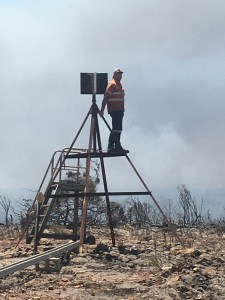
Although bushfires do play a significant role in Australia’s eco systems, they are becoming more frequent and more intense as a result of global warming. According to the most recent bushfire royal enquiry, the increasingly destructive fire weather, such as record high temperatures, dryness, and less rainfall, would render present disaster management techniques inadequate.
BALSafe recognises the significance of Indigenous Australians’ use of cultural burning in the preservation of Australian landscapes.
Understanding the capabilities of blaze control necessitates acknowledging that cultural burning techniques won’t avoid bushfires and that this shouldn’t be the expectation or the goal in order to live with and on the Australian terrain in a respectful and harmonious manner.
By bringing fire back into the landscape, cultural burning helps to enhance the health of the bush, bring Indigenous people back to Country, and reduce fuels so that bushfires are easier to control when they do break out.
BALSafe is BPAD Bushfire Planning & Design Accredited (BPAD52359) in Western Australia.

or call 0448 293 220
Service locations include:
Bunbury, Busselton, Dunsborough, Margaret River, Boyup Brook, Bridgetown, Greenbushes, Capel, Collie, Dardanup, Donnybrook, Harvey, Manjumup, Nannup, Jurien Bay, Moora, Gingin, Narrogin, Wagin, Brookton, York, Northam, Wongan Hills, Dalwallinu, Southern Cross, Merredin, Bruce Rock, Lake Grace and all places in and around and in between.
Head Office: 6 Stanley Street, BUNBURY WA 6230